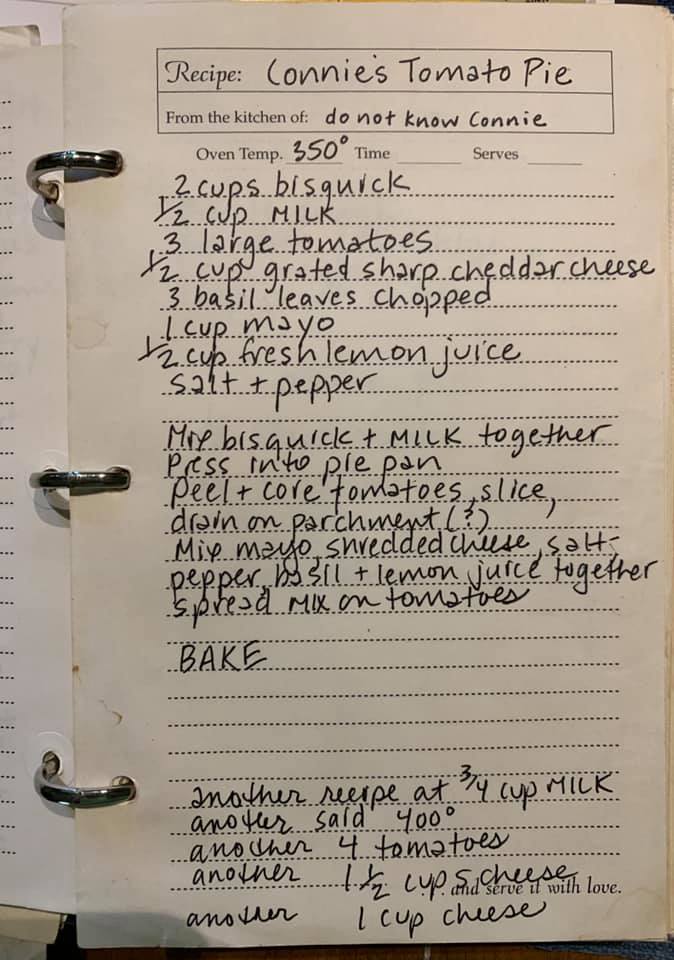
One would think that someone with a cookbook collection like mine – particularly one with a solid Southern bent that includes a number of church, Junior League and similar collections as well as some Southern classics – would have a solid tomato pie recipe or three among them. And yet, after recently combing through the ENTIRE collection, I realized the TWO I come up with in no way resemble the pies I’ve had in the past that I know had some sort of tomato, mayo, cheese mix.



 A few months ago, my girl had asked if we could rent a
  Before we get too far from the holidays and into the cold frozen bleakness of January, we need to talk about cinnamon buns.
 A wise woman once told me that she spends Mother’s Day doing what she wants. In her case, it was making brunch for her family, but still very good advice to adopt.

 Pat came across some pawpaws on a recent fishing trip and brought them home for me to experiment with. For the uninitiated, pawpaws are a native fruit not typically found in the grocery store or even at farmer’s markets. They tend to fall off the tree when they are fully ripe, which happens to coincide with them being incredibly delicate. This delicateness is a large part as to why they aren’t well known – they don’t travel well and need to be eaten almost immediately while giving off an aroma that permeates the surrounding area. They smell like they taste, tropical and yeasty – think a slightly fermented mango-banana mix. They aren’t much to look at – shades of green and black. Peel the skin off to find pulpy, soft flesh littered with large seeds, that require some work to get to the fruit. A 3″ pawpaw produces a surprisingly small amount of pulp. It takes a number of fruits to be able to make something with them, so if you come across some, grab more than you think you’ll need. They can be eaten raw, but they bake well too, especially when paired with dairy.
  Chicken Wire & Paper Flowers