

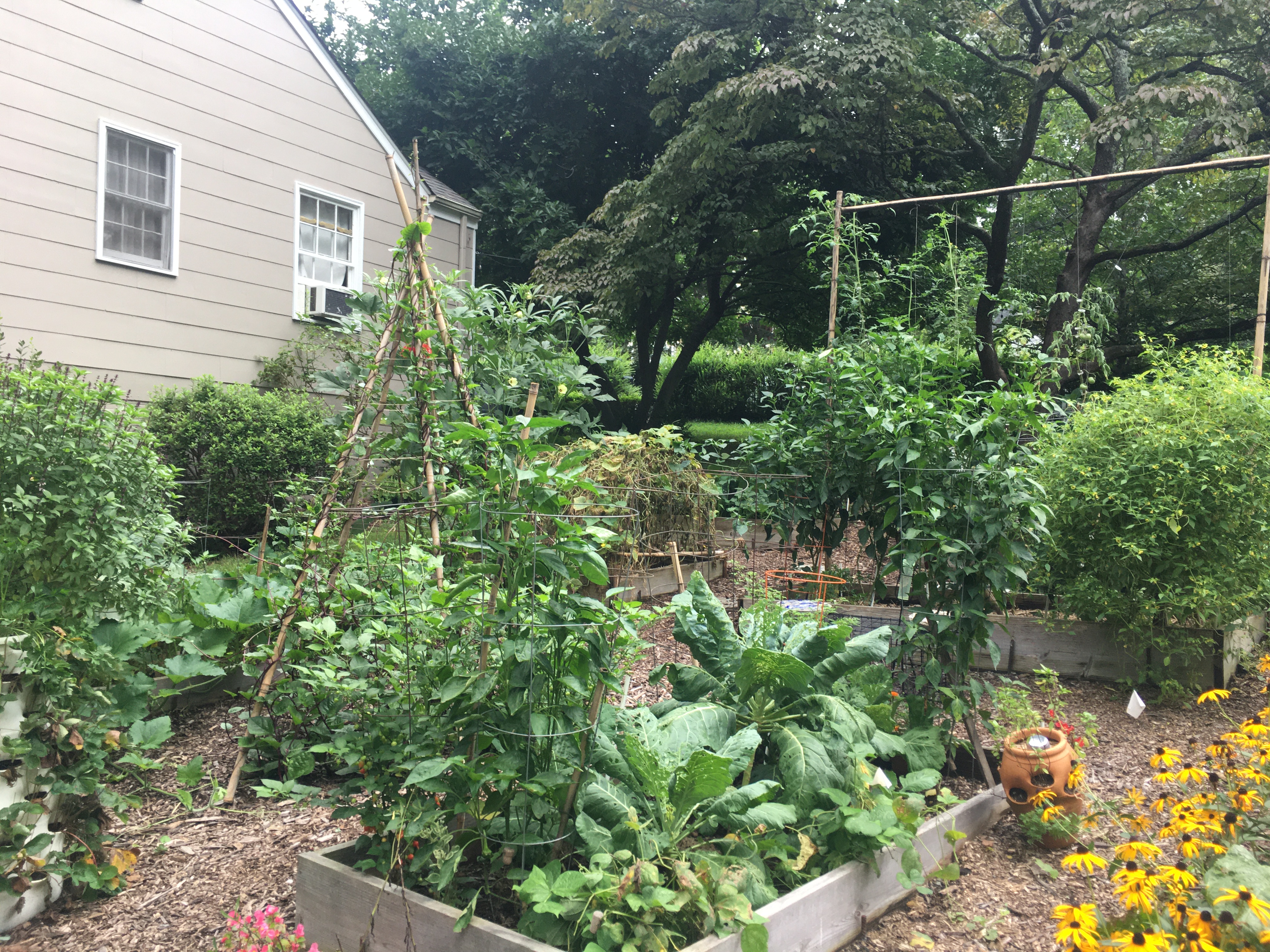

The squirrels are beating us to the tomatoes this year – Daisy hasn’t yet found her voice to scare them away as well as Betsy beagle did, but considering how far she’s come in every other way, we’ll overlook it. Without a beagle chasing unwanted visitors off, it’s become wildlife central out there, with rabbits keeping the sweet potato greens from running outside of their raised bed and an entire charm of hummingbirds fluttering about all day, stopping to rest on top of the cages around the pepper plants. The hummingbirds are next to impossible to capture with a camera but of course that doesn’t stop me from trying. All of the animals seem to be getting quite comfortable with us out there, which I suppose has its pluses and minuses.
Continue reading




 Pat came across some pawpaws on a recent fishing trip and brought them home for me to experiment with. For the uninitiated, pawpaws are a native fruit not typically found in the grocery store or even at farmer’s markets. They tend to fall off the tree when they are fully ripe, which happens to coincide with them being incredibly delicate. This delicateness is a large part as to why they aren’t well known – they don’t travel well and need to be eaten almost immediately while giving off an aroma that permeates the surrounding area. They smell like they taste, tropical and yeasty – think a slightly fermented mango-banana mix. They aren’t much to look at – shades of green and black. Peel the skin off to find pulpy, soft flesh littered with large seeds, that require some work to get to the fruit. A 3″ pawpaw produces a surprisingly small amount of pulp. It takes a number of fruits to be able to make something with them, so if you come across some, grab more than you think you’ll need. They can be eaten raw, but they bake well too, especially when paired with dairy.
 Chicken Wire & Paper Flowers